The Portrait No One Takes: On Makeup, Performance, and the Self We Don't Photograph
A New Year’s Eve reflection on appearance, priorities we choose, and moments we seek to remember.

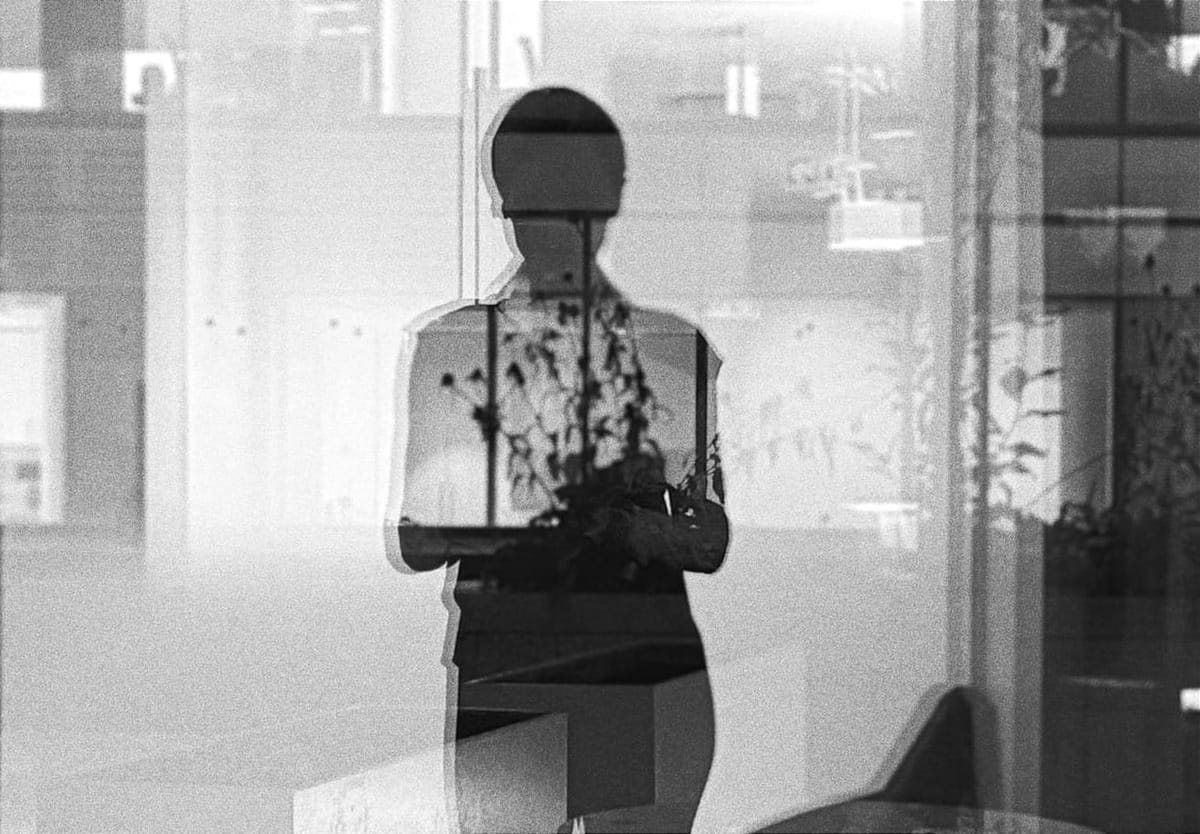
I was carrying a trash bag when I saw her.
She had come downstairs in a short dress. Hair sleek, makeup polished, all of it precise and intentional. New Year's Eve, moments before midnight. I was in gym clothes, heading out late with my garbage. We occupied the same lobby for a few seconds, and the contrast was hard to ignore – not just in how we looked, but in what each of us seemed to be doing with the night.
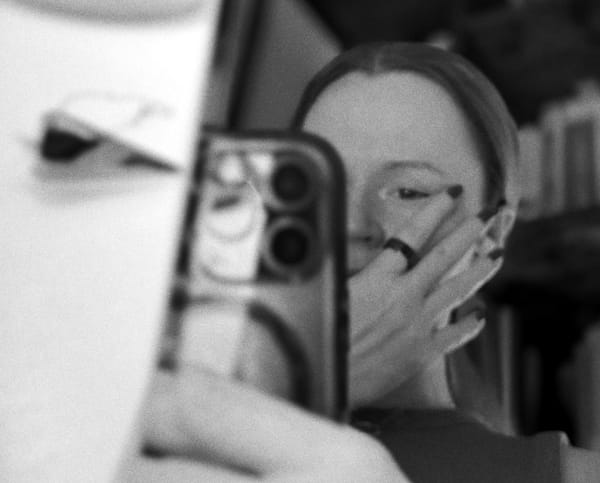
She took a selfie before her guests arrived. I thought about it for the rest of the walk.
Something about that selfie named a truth that's difficult to articulate.
It was a record of an exception. She knew – some part of her knew – that this polished, assembled version wasn't the daily one. She wanted to hold onto it, the way you hold onto something that costs effort and doesn't last. The dress, the hair, the careful makeup: they belonged to New Year's Eve the way a costume belongs to a performance. And she was documenting the performance, not herself.
The woman in front of me was warm. A kind of care came off her naturally – a person who gave a damn about her guests and the night and everything going right. That warmth was real. It was also, to any observer, in some gentle tension with the look she'd chosen. The look was smart, assembled, socially fluent. The warmth was something else entirely. Less constructed. More her.
Makeup is a shared language. However personally it's applied, the grammar is standardized: highlight here, minimize there, signal effort, signal femininity, signal participation. What it doesn't do – what it almost structurally can't do – is reveal anything singular. It makes individual faces more alike. And the particular irony is hard to ignore: women are acutely invested in looking young, and yet makeup, almost without exception, adds years. It replaces the face's natural animation with a finished surface. A finished surface is still. Youth is restless and unguarded. The mask is always a little older than the person behind it.
The body on display in a short dress makes an argument within a social conversation about desirability, selection, worth. But the premise has always felt slightly false. Every woman has a body. Every one of them is desired by someone. There is nothing to prove, nothing to compete for, nothing so unusual about the form that it needs to be announced. What is unusual – what is actually irreplaceable – is the interior. The texture of a person's thinking. What they built and what they're building. What moves them below the level of image.
All the rest is bling. Beautiful, sometimes. But bling. Decoration layered over the thing that actually matters.
And here is what strikes: people wear it with the confidence of having shown something essential. They're proud of the bling in the way you're proud of your depth. That gap – between what is displayed and what is meant – is the thing worth examining.
If there were a portrait worth making of that woman on New Year's Eve, it wouldn't be the one she made herself. Not the assembled version, the occasion self. The interesting portrait is who she is on an ordinary Sunday. Whether makeup appears then. What she wears when she has no one to convince. What she looks like when she's thinking about something she loves.
That's the real portrait. Not her best look. Her actual one.
She had documented the exception, immortalized a single dressed-up hour, and the rest of the year remained unphotographed. Strange way to enter a new year – each person catching a glimpse of the other's chosen performance, while the more interesting versions of both go unrecorded.