What No One Told You About Desire: It Was Never Just Physical
A reflection on the thin line between sexual energy and the drive to create.

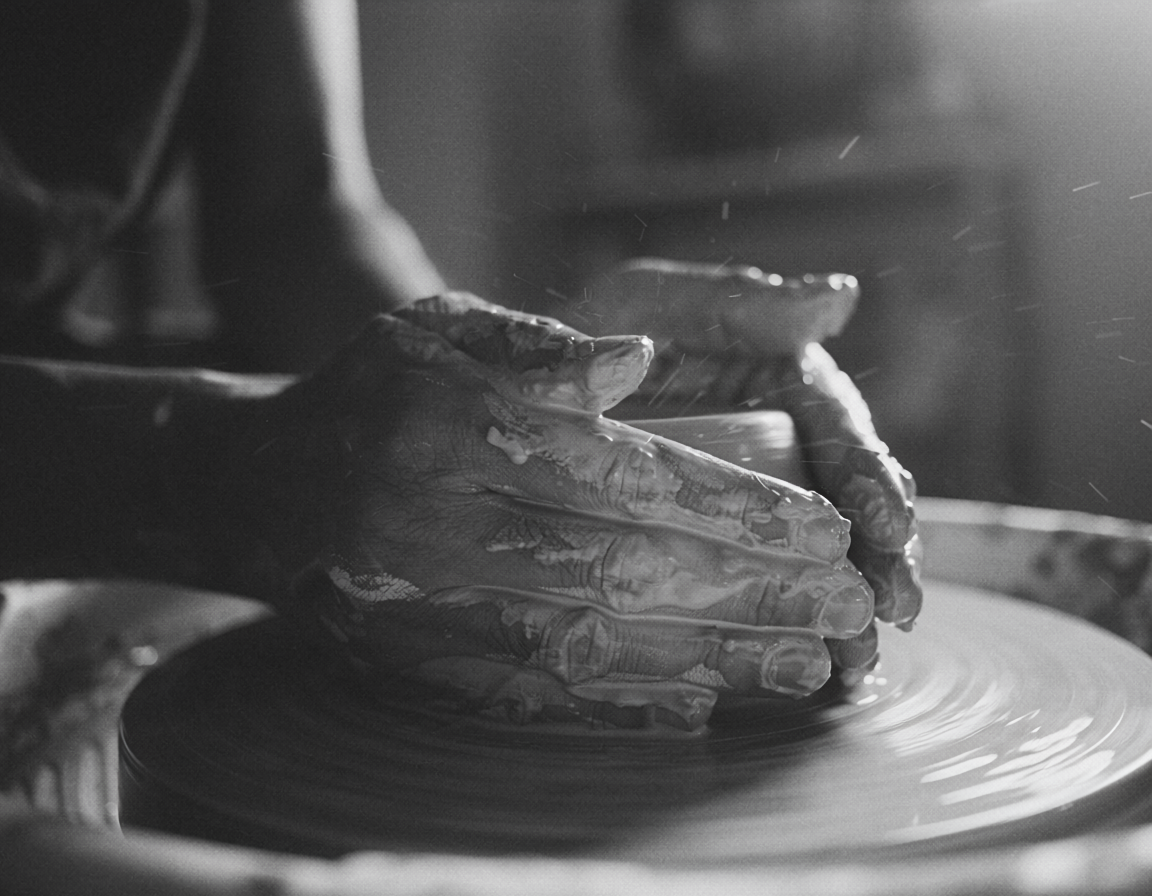
Here's a thought most people don't say out loud: the feeling you get when an idea grabs you – the warmth in the chest, the pull forward, the sense of expansion – that feeling is physically indistinguishable from desire.
Not metaphorically. Physically. The body responds the same way.
I've felt this working on a design. Looking at a particular quality of light. Following a thought all the way to the end and finding something true there. The feeling is in the chest, in the breath, in the body. And it is not too different from the feeling of being attracted to a person.
What if that's not a coincidence?
The usual frameworks treat sexual energy and creative energy as two separate things – one physical, one intellectual, occasionally overlapping in romanticized notions about "tortured artists." But what if they're the same energy wearing different clothes?
Sexual energy is, at its root, the energy of creation. That is its literal biological function. Life making more life. But the drive that animates that process – the vitality, the outward impulse, the need to generate and build – that drive doesn't switch off. It moves through the body looking for expression. And when a person is genuinely alive to what they're creating, when they're working on something that matters, when they're moving forward on an idea they believe in, the body responds to that the same way it responds to physical attraction.
This is why the most creative, generative people – the ones who build things that actually last – tend to carry a particular intensity. It reads as sexuality because it is the same force. It's just directed outward, toward work, toward the world.
The problem appears when the force is used without the creating.
A vital energy this strong needs an object. When it lacks one – when there's no genuine act of creation, no meaning behind the movement – it seeks satisfaction as a replacement. The feeling without the purpose. The consumption without the contribution.
This is the destructive inversion: taking instead of creating. The same force that builds becomes the force that hollows out. And because the destruction is real, visible, and recurring, entire cultural systems developed around controlling it. Religion, shame, prohibition. They saw what the force did when it ran backward. They concluded the force itself was the danger.
They misidentified the problem. The force isn't dangerous. Emptiness is. A life with no genuine creative outlet, no outward direction for this vital energy, becomes a kind of pressure that pushes toward whatever release is available. Cut off from creation, it becomes consumption. Cut off from meaning, it becomes need.
The corrective isn't suppression. It's direction.
When this energy is working the way it's designed to – when it's pointing toward something real, something you're building for others, something that carries your best – it doesn't need to be managed. It manages itself. It shows you what to pay attention to. It points toward the problems worth solving, the beauty worth making visible, the ideas worth carrying all the way to the end.
You don't need a partner for this version. You don't need an audience. You need a direction.
The body knows the difference between moving toward something and filling a hole. The first feels like expansion. The second never quite satisfies, because it was never designed to.
Sexual energy and creative energy are the same life force. One creates humans. The other creates everything else. Both require the same thing: a genuine act of making, not just taking.
Stop splitting them. Start following where the force actually leads.