What We Owe Each Other: the Case for Emotional Liberation as a Shared Project
The men I am thinking of are not broken. They are intelligent, caring, careful humans who have drawn a single, devastating conclusion from a lifetime of evidence: that the full expression of who they are is not safe in the world.

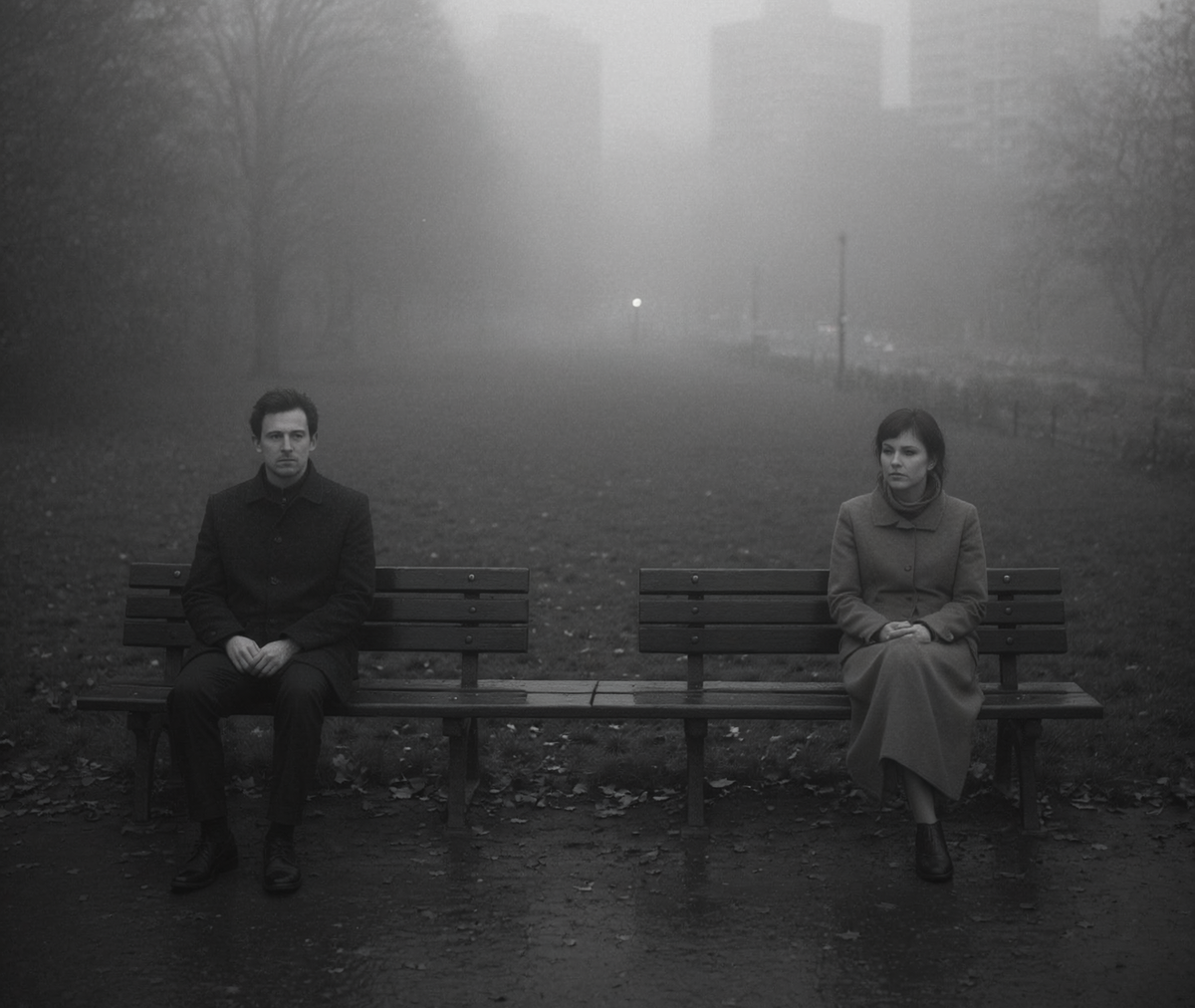
The men I am thinking of are not broken. That is the first thing to say, and the most important. They are intelligent, caring, careful humans who have drawn a single, devastating conclusion from a lifetime of evidence: that the full expression of who they are is not safe in the world. That connection is a risk they cannot afford. That the family, the love, the intimacy they may quietly want – all of it is, somehow, not for them.
They did not arrive at this conclusion arbitrarily. They were taught it. And the question that matters is not whether they were wrong to learn it, but what kind of world produced such a lesson – and what we are prepared to do about it.
The silence we call strength
Human beings require emotional expression the way they require food and sleep. This is not a philosophical claim – it is a physiological one. Suppressed emotion does not disappear. It accumulates. It manifests as chronic stress, as disconnection, as the specific kind of exhaustion that comes not from working too hard but from performing, constantly, a version of yourself that is only partially true.
Men have been performing this version of themselves for generations.
The performance has a name and a history. Its name is stoicism, though it bears little resemblance to the philosophical tradition that name invokes. The Stoics were not advocates of emotional numbness. Marcus Aurelius wrote extensively about love, grief, and the full range of human feeling. What they taught was that we need not be controlled by emotion – not that we should pretend it doesn't exist. The stoicism handed to men is a corruption of that tradition: a demand not for emotional intelligence but for emotional absence. Not feel and choose wisely but do not feel at all.
The costs of this corruption are everywhere. In men who cannot name what is wrong when something is wrong. In relationships that die not from hostility but from a creeping inability to cross the distance. In the recurring, heartbreaking sentence: I don't think family is for me — spoken by someone who, if you watch carefully, clearly wants to be wrong.
The taxonomy of virtue and its distortions
There is a long tradition in moral philosophy of treating virtue as universal – the properties of a good human life, available to any human willing to cultivate them. Courage. Temperance. Justice. Practical wisdom. None of these was understood, by Aristotle or his inheritors, as belonging to one sex or another.
Then culture intervened, as it always does, and sorted the virtues by gender. Strength, reason, and authority to men. Warmth, care, and receptivity to women. This sorting was never philosophically defensible. It was a social convenience – a way of organizing labor and power – dressed in the language of nature.
The damage of that sorting is not merely that women were denied authority or men denied tenderness. The deeper damage is that it produced incomplete human beings and then called them complete. A man who has excised care from his repertoire of possible responses is not exhibiting a virtue; he is exhibiting a wound. A woman who has been trained to need external validation for her intelligence is not exhibiting femininity; she is exhibiting a scar. We dressed these wounds in cultural value and told people to be proud of them.
The feminist project recognized this with respect to women decades ago. We understood that the "feminine virtues" were not freely chosen expressions of female nature but constrained performances in a system that punished deviation. We fought, correctly, for the freedom to be more than what the taxonomy allowed.
The logical extension of that argument is this: men deserve the same freedom. Not from strength or responsibility – those are genuinely valuable traits. From the forced exclusivity of those traits. From the cultural prohibition on the rest.
The mirror we rarely hold up
This is where the argument becomes personal.
Those of us who care about this problem – who love the men in our lives and want something different for them – must be willing to examine our own participation in the system we are critiquing. Not as an exercise in self-punishment, but as an act of intellectual honesty that makes actual change possible.
Consider what women, including progressive women, including women who believe deeply in equality and emotional intelligence, tend to reward in men. Confidence. Decisiveness. The appearance of certainty, even when uncertainty would be the more accurate response. Now consider what the same women tend to pathologize: hesitation, expressed need, visible emotion in high-stakes moments, the admission of not knowing.
We say we want men who can be open. We also, in practice, in the unguarded moments of real relationship, punish the expression of openness when it comes at an inconvenient time or in an inconvenient form. We call men who need comfort needy. We call men who express fear weak. We call men who ask for help repeatedly, as if it is a flaw of character rather than a product of a world in which asking for help was never modeled as possible.
Social conditioning is not something we can opt out of through intellectual conviction alone. I know this from experience. I have held every progressive belief about gender, done years of internal work, and still found myself, in moments of stress, running the old programs. Expecting him to manage it. Expecting him to know. Withdrawing something – attention, warmth, respect – when he didn't perform the strength I had unconsciously required.
This is not evidence of hypocrisy. It is evidence of how deep the wiring runs. The first step toward changing it is admitting it is there.
What a different approach would look like – and what it would not
The argument I am making could be misread as asking women to manage men's emotional development. That is not the argument. It is a much more modest claim: that if we want the world to be different, we need to examine and change our own behavior within it. Not as a service to men, but as an act of integrity with our own stated values.
In practice, this might mean listening in a way that creates space for men to find their own words for what they feel, rather than supplying the words for them or moving past the moment because it is uncomfortable. It might mean noticing when we reach for judgment — he should have handled that better, he should know by now — and choosing curiosity instead. It might mean celebrating the men in our lives for their kindness, their care, their presence, rather than exclusively for their accomplishments and competence. These are not large gestures. They are consistent small ones. Which is how cultural norms actually change.
What this approach does not mean: tolerating harm. There is a category of behavior – cruelty, violence, persistent contempt – that falls outside the project of patient compassion not because those who enact it are beyond care, but because staying in contact with harm is not a requirement of loving another person. We cannot change anyone. What we can do is change the conditions within our own sphere of influence. For those who have built their identity around hurting others, those conditions may include our absence.
The distinction matters. Compassion as a practice does not require self-erasure. It requires discernment.
The scale of the problem and the scale of the solution
We should be honest about the timelines involved.
The emotional unavailability of men is not a problem that emerged recently. It was constructed across centuries, reinforced across generations, embedded in language, law, religion, and every story culture tells about what men are for. The first hesitant signs of a new approach – fathers who tell their sons it is acceptable to cry, therapists who specialize in men's emotional health, conversations like this one – represent perhaps fifteen years of revision in a system centuries old.
Real generational change takes three to five cycles. The children who are being raised now with different messages will raise children with slightly different messages still. That is how it works. We are, at best, two generations from meaningful cultural shift. Possibly more.
This is not a reason for despair. It is a reason for clarity about what we are actually doing when we choose to behave differently. We are not solving the problem in our lifetime. We are changing the inheritance we leave. The man who receives genuine acceptance from one person may not become, suddenly, fully open – but he carries a data point that was previously missing. The boy who sees his father acknowledged for tenderness rather than mocked for it grows up with a slightly different map of what is possible.
Data points accumulate. Maps change. Slowly.
The final claim
The case I am making is philosophical before it is political or personal: human wholeness is the precondition for human flourishing, and human wholeness has been systematically divided by gender for so long that we have forgotten it was a division and not a given.
Love is not a feminine gift. Strength is not a masculine one. They are human capacities, available to everyone, necessary to everyone, distorted in everyone by the taxonomy we inherited. The project of repairing that distortion belongs to everyone too.
This is not a letter of blame. It is an argument for shared work. And it begins, as all shared work does, not with the demand that someone else change, but with the decision to start where you can: in your own patterns, your own expectations, your own unexamined responses to the people in front of you.
Start there. Stay there. It is slower than a demand and more durable than a revolution.